Across Europe, thousands of social housing districts built during the post-war decades are entering a critical moment. Ageing buildings, low energy performance, accessibility barriers, limited public spaces and fragmented communities intersect to create complex environmental and social challenges. Renovating these areas is no longer just about insulation or installing new systems: it is about strengthening social cohesion, unlocking local economic potential and ensuring that the green transition benefits people in their everyday lives. The Horizon Europe project drOp – Digitally enabled social district renovation processes set out to show how this can happen at neighbourhood scale, even without the leverage of a major renovation budget. It demonstrated that when residents, municipalities and innovators work together intentionally, district renovation becomes not only feasible, but genuinely transformative. As Europe prepares to launch the European Affordable Housing Plan on 16 December, drOp’s lessons arrive at a particularly timely moment for policymakers and practitioners alike.
At the centre of drOp is the Integrated Renovation Methodology (IRM), a structured yet flexible framework designed to guide cities through the full cycle of neighbourhood transformation. The IRM brings together three pillars that too often operate in isolation: social innovation and co-governance, urban and technical improvement, and local economic development. Rather than prescribing a fixed sequence, the IRM offers a pathway that can be adapted to local circumstances, allowing cities to enter at different stages depending on their needs. Municipalities can, for example, begin by engaging residents in diagnosis without immediately planning major works, or use the local economic development tools to identify opportunities for skills and entrepreneurship even when technical planning is already underway. drOp thus provides not a rigid blueprint, but a method that acknowledges how much neighbourhood transformation depends on trust, participation and locally grounded potential.
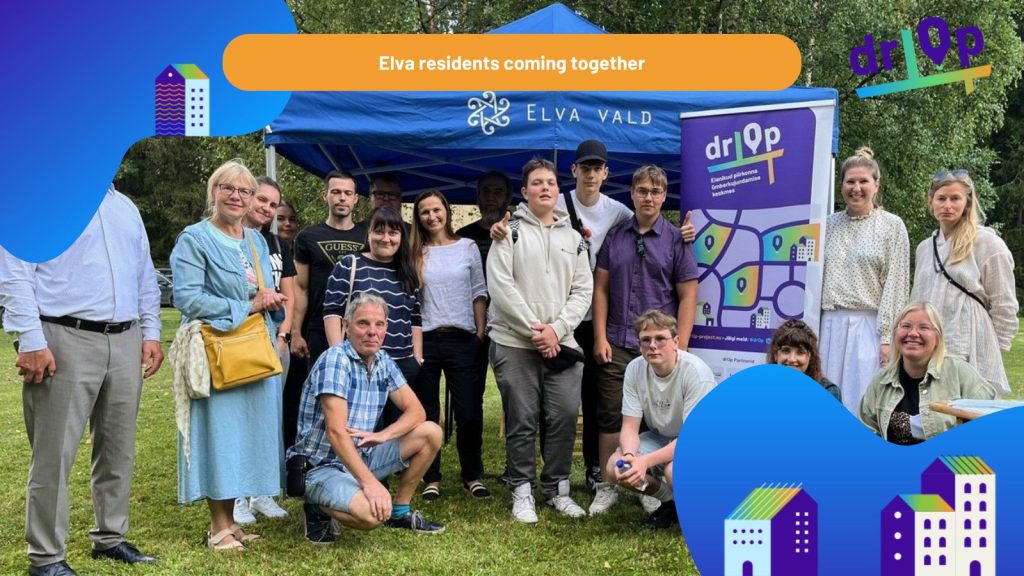
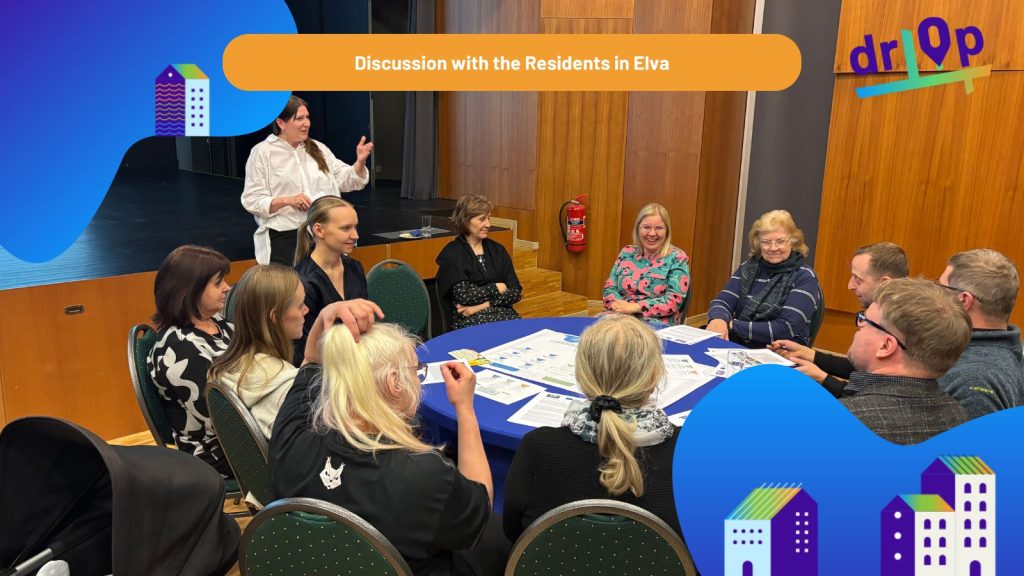
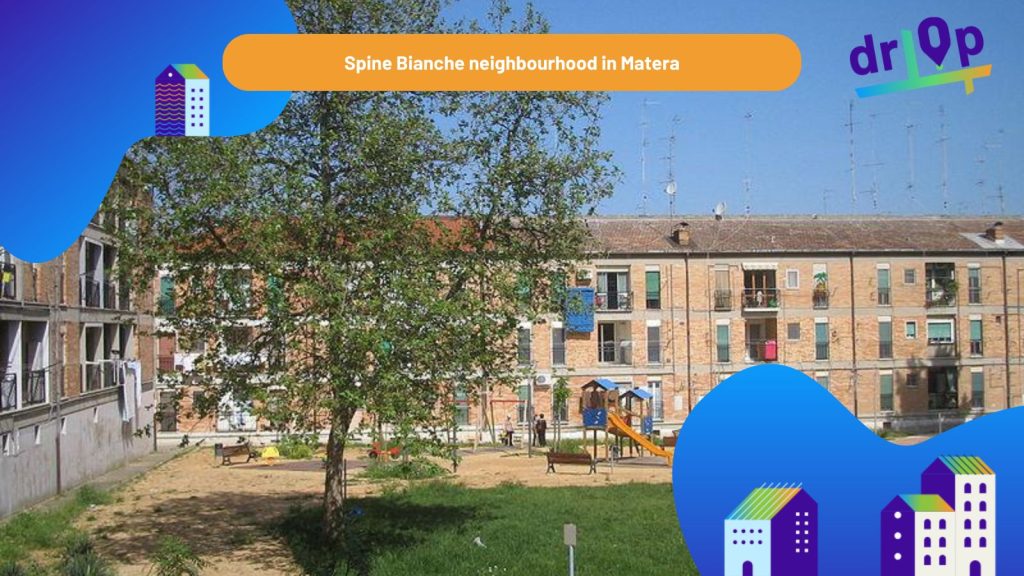
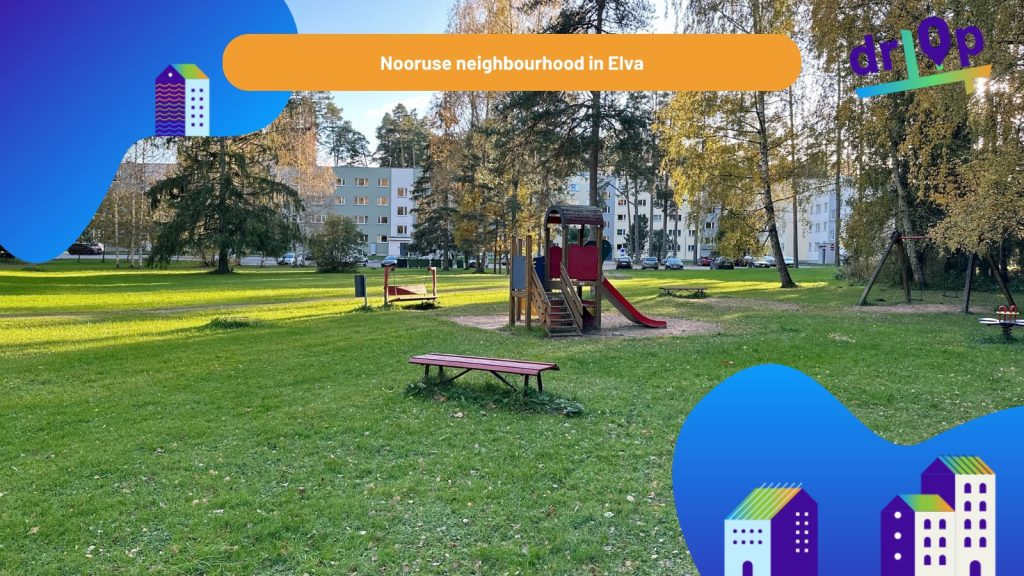
This methodology emerged through close collaboration between three different cities. Ermua (Spain), the demonstration site, applied the method in the Santa Ana neighbourhood, providing real-life feedback on what works and what requires adjustment. Matera (Italy), drawing on its European Capital of Culture 2019 experience, contributed deep knowledge on culture-driven participation, identity-building and creative community activation. Elva (Estonia), recognised for its digital governance, shared tools and expertise on how data and digital public services can enhance transparency, engagement and planning. Together, they shaped a methodology that is immediately recognisable to cities across Europe because it reflects the diversity of their realities and strengths.
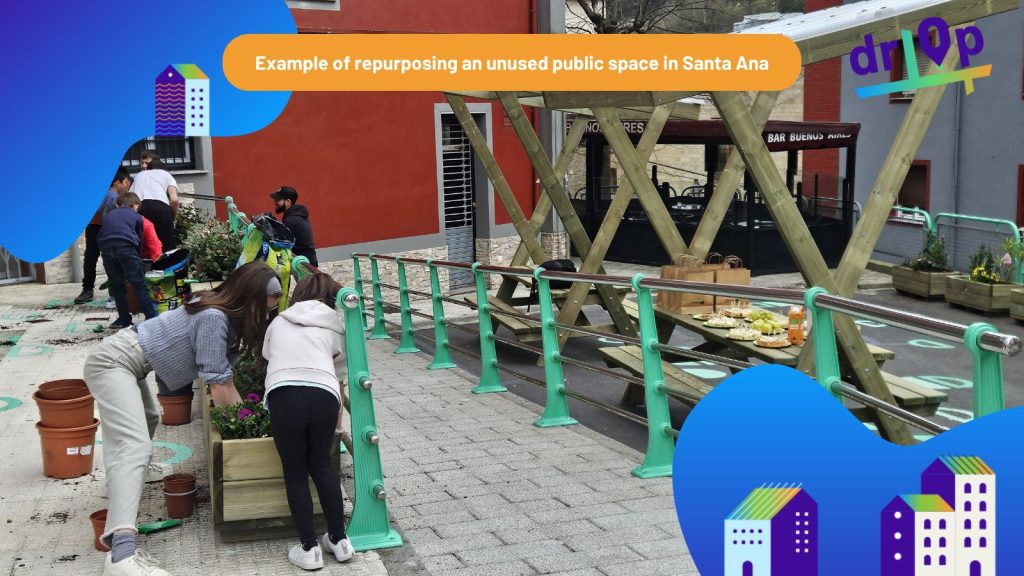
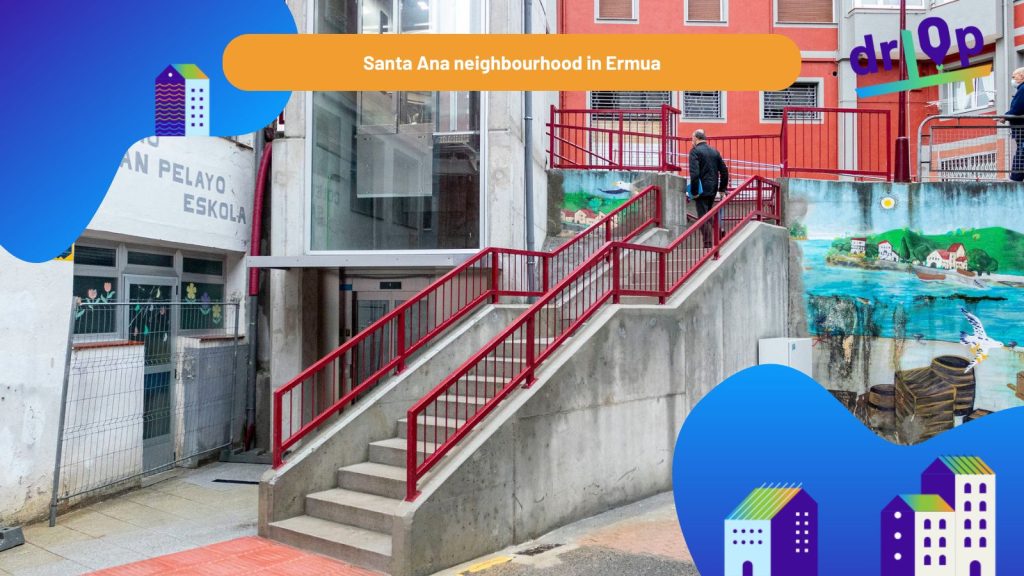
This collaborative approach became most visible in Santa Ana, the neighbourhood where drOp’s ideas materialised on the ground. Built rapidly in the 1960s and 1970s to accommodate a dramatic population increase, Santa Ana grew without a comprehensive urban plan, resulting in deteriorated public spaces, accessibility challenges, and a lingering sense of neglect among residents.
Generally, the interventions carried out by the drOp project were meant to address digitalisation, energy efficiency, public spaces and social cohesion, as a way to improve the overall quality of life for residents. A Local Task Force, bringing together residents, associations, municipal staff and specialists, became the backbone of the governance model, meeting regularly to shape the neighbourhood’s vision, prioritise interventions and monitor progress.
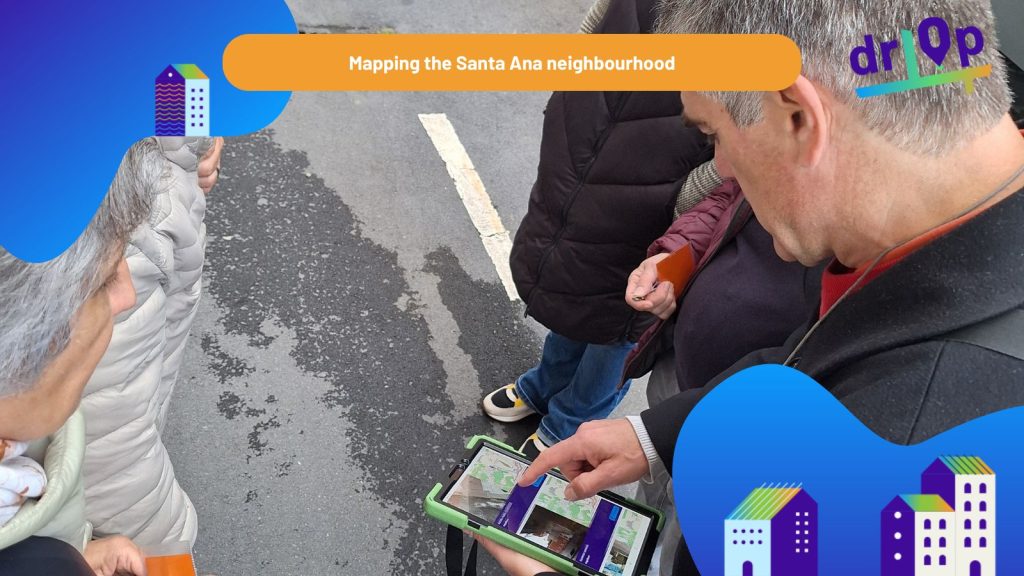
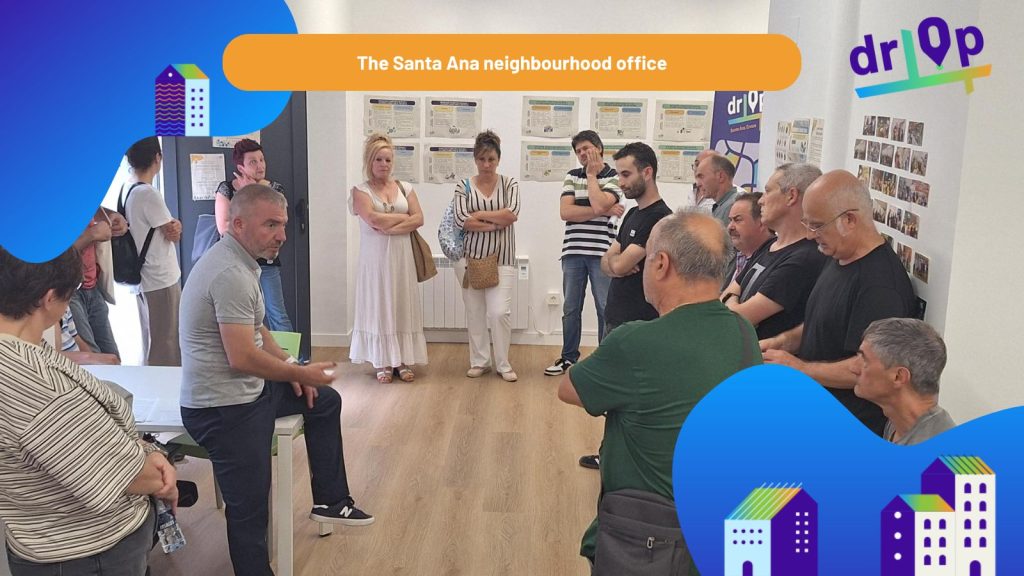
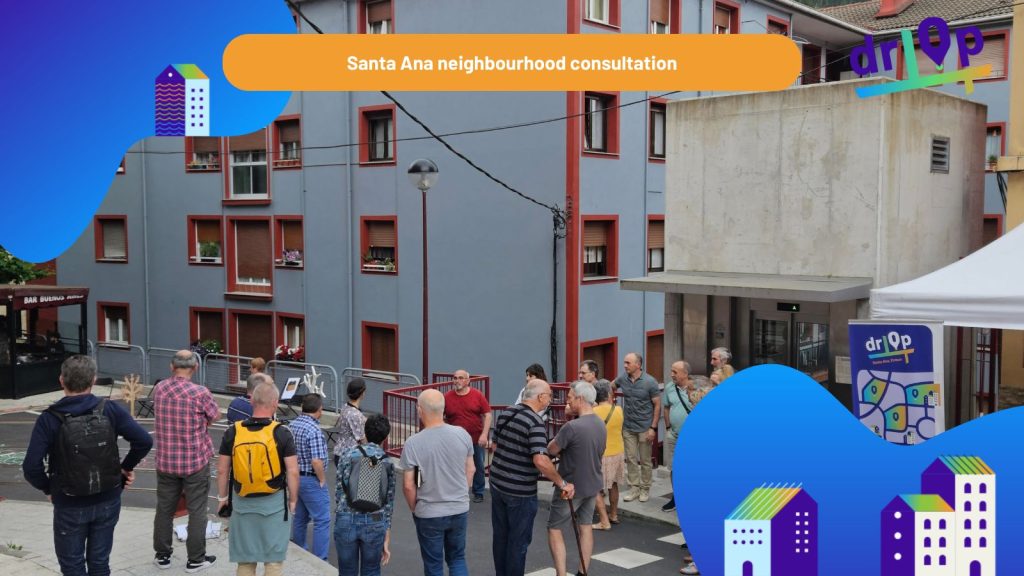
One of the first major steps was the Mapathon, an interactive mapping walk supported by a simple digital tool. Residents walked through Santa Ana identifying accessibility barriers, safety concerns, minor maintenance issues and underused spaces. For many, it was the first time they explored their neighbourhood with a positive attitude and the intention to improve it. The municipality resolved several of the minor issues quickly, reinforcing the message that participation leads to tangible outcomes. The establishment of a Neighbourhood Office soon followed. Strategically located at the heart of Santa Ana, the office offered energy bill advice, information on rehabilitation issues and a continuous presence of the drOp team. In a neighbourhood where trust had eroded over time, the office became an essential anchor, turning an abstract project into something visible and accessible.
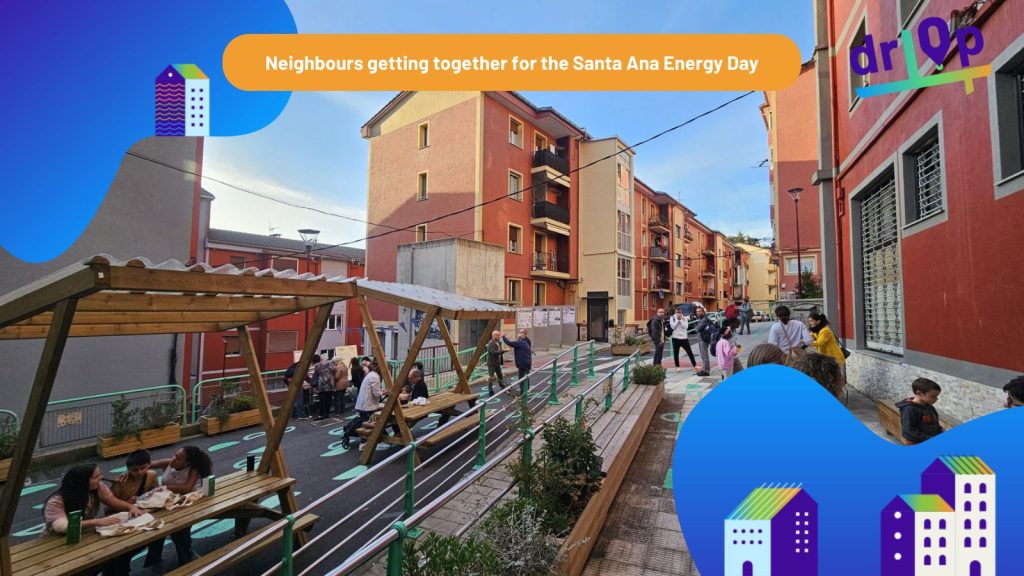
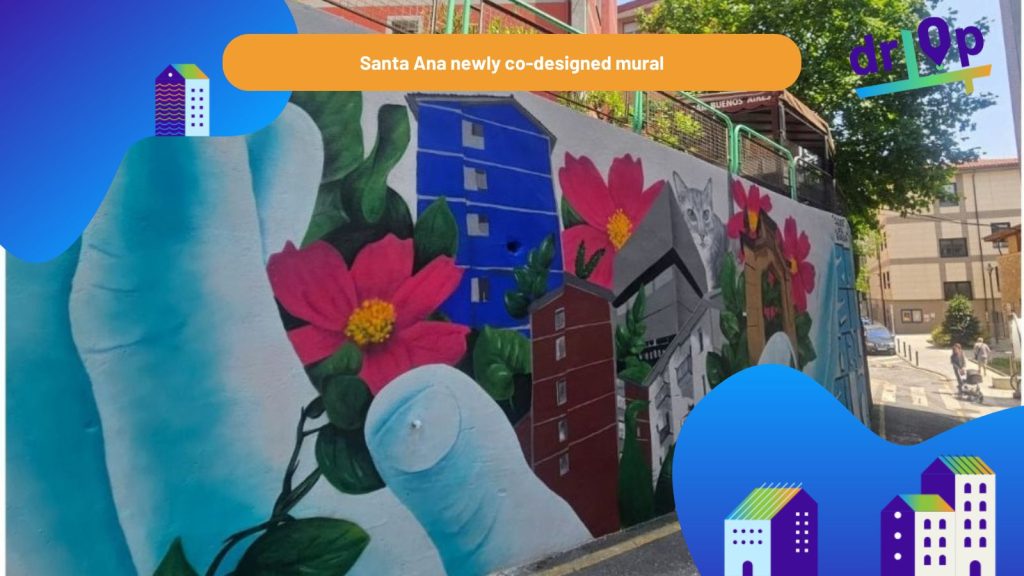
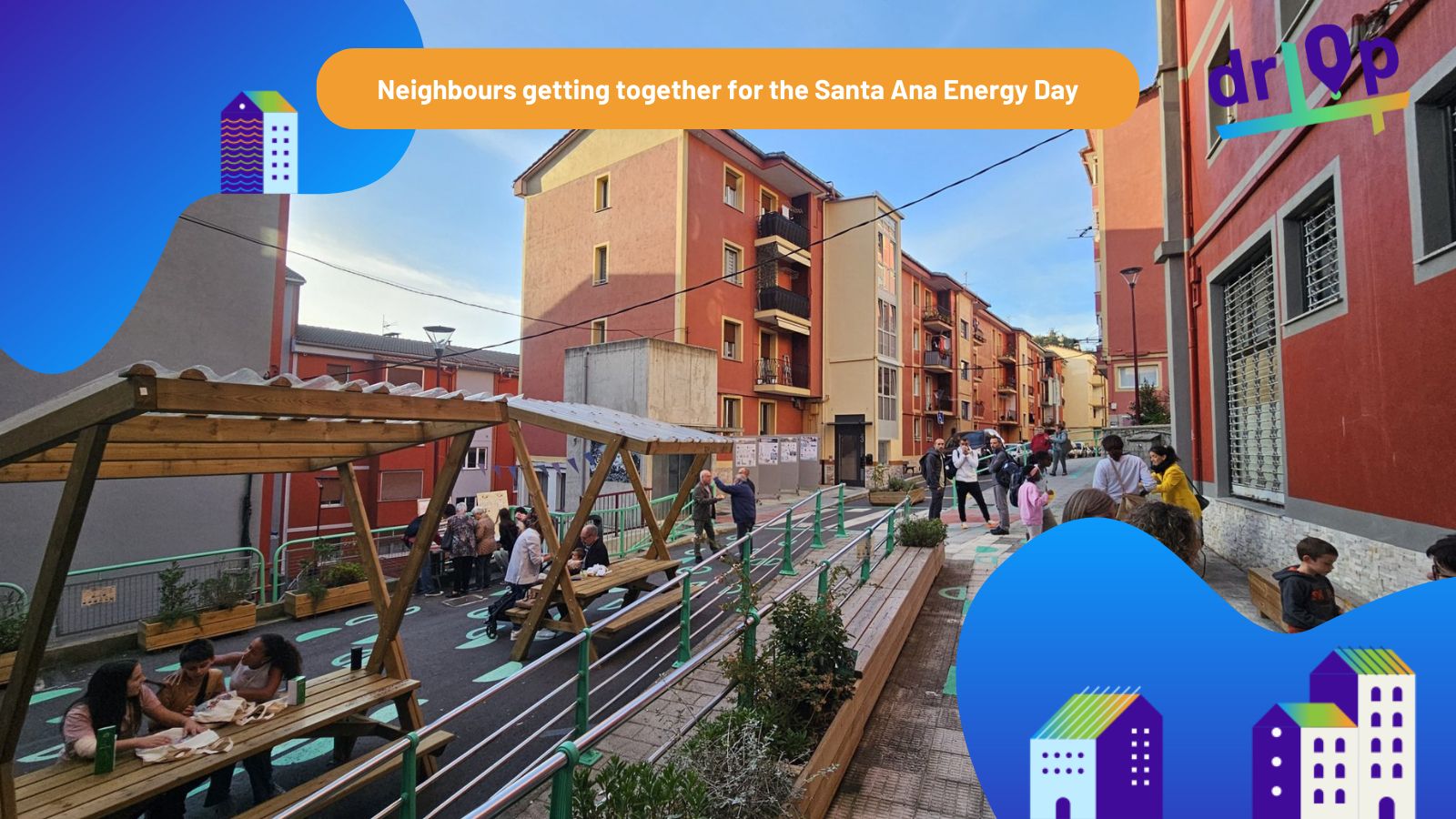
Over time, Santa Ana evolved into a testing ground for ten co-created actions. A former dead-end parking area became the focus of a tactical urbanism experiment — a temporary, low-cost transformation of public space used to test ideas before any permanent decisions are taken. Through light interventions such as seating, greenery and pedestrian-friendly layouts, neighbours were able to observe how different uses changed the dynamics of the space. A worn-out façade was transformed into a community-selected mural, chosen through a public vote among designs proposed by local artists, turning a neglected party wall into a symbol of shared identity. An architecture competition invited professionals to reinterpret a central square based on priorities defined during resident workshops, reinforcing the connection between urban design and local values.
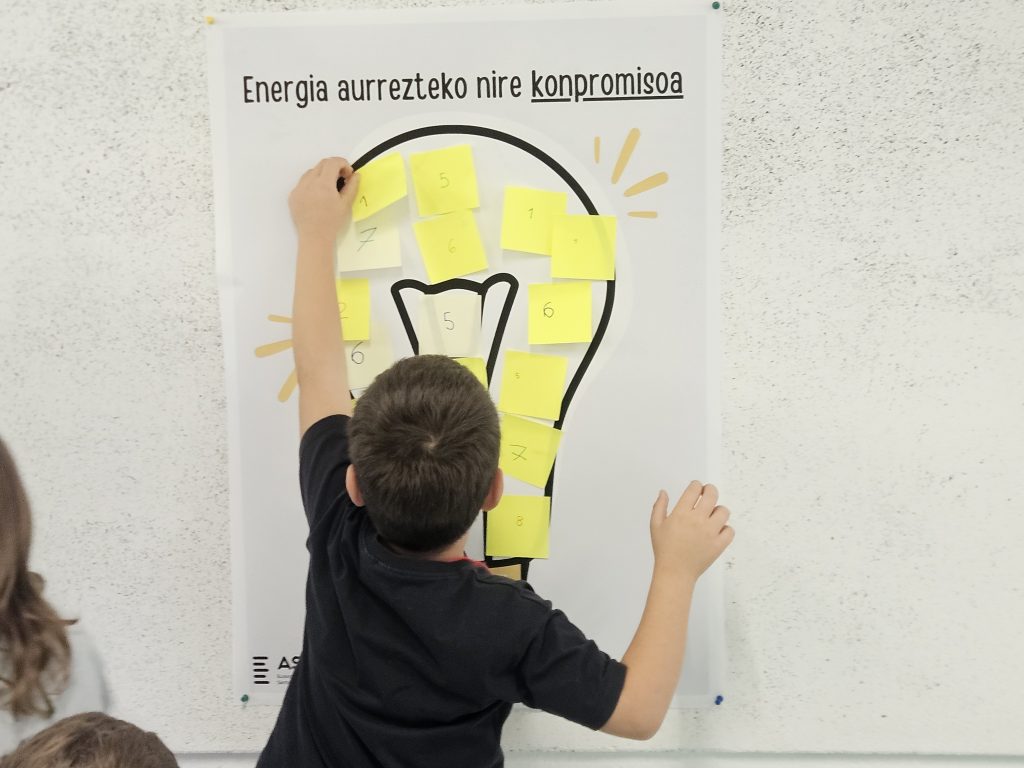
Complementing these urban interventions, drOp invested in people. A certified training programme on energy-efficient construction enabled residents to acquire new skills that may lead to future employment opportunities. In total, 8 students completed the course, illustrating how renovation can also support local economic development. One of the most innovative actions was the creation of EkiElkar, the Santa Ana energy community, which brings together households, a local school and local businesses around shared solar energy production. drOp supported the legal, technical and administrative setup, while the long-term governance will rest with local members. In parallel, a pilot on digital health services helped senior residents access tools that support independence, safety and wellbeing, reinforcing the principle that neighbourhood transformation includes social infrastructure, not just buildings. Finally, the neighbourhood hosted its first Santa Ana Energy Day, a community event showcasing the possibilities of local renewable energy, giving residents a chance to learn about EkiElkar, engage with experts and celebrate the neighbourhood’s progress toward a more sustainable future.
These combined efforts produced meaningful social impact. Over 130 residents actively participated in co-creation activities, many for the first time. Workshop participation, Mapathon attendance and festival involvement attest to a growing local mobilisation. The Mapathon alone brought together a significant number of participants, while the Neighbourhood Office registered a steady flow of consultations throughout the project. Networks strengthened, local confidence increased and residents began shifting from an individual to a collective vision of their neighbourhood’s future. Participation became more natural, and residents increasingly saw themselves as co-authors of change rather than passive beneficiaries. This cultural shift is one of the project’s most important legacies.
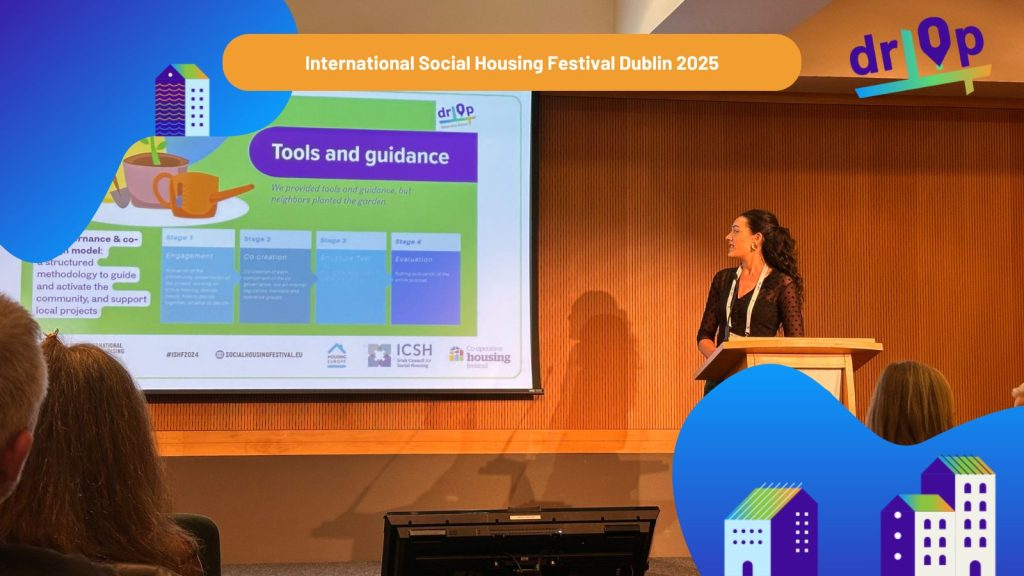
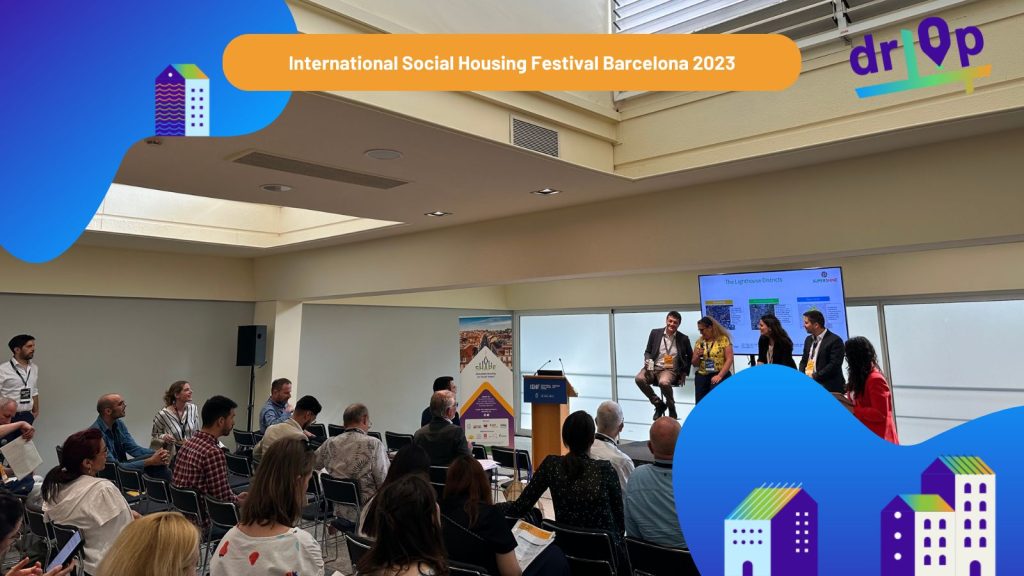
While Ermua led implementation, Elva and Matera played a crucial role in refining the methodology through a structured peer-learning process. Study visits, mentoring sessions and workshops allowed each city to share insights, question assumptions and adapt lessons to their own contexts. drOp also collaborated with its sister projects ProLight and SUPERSHINE, all operating under the wider umbrella of the Affordable Housing Initiative (AHI). Another important partners project was the overarching Affordable Housing Initiative European Partnership. Each project focuses on a specific dimension of district renovation, but they share the overarching goal of renovating neighbourhoods in a socially inclusive, community-driven and environmentally sustainable way. Joint sessions at the International Social Housing Festival in 2023 and 2025 helped exchange early findings and explore how Europe’s neighbourhoods can become laboratories of the green and just transition.
One of the main outputs of this collaborative approach is the Replication Roadmap, a practical guide enabling cities to apply drOp’s approach in full or selectively. Its modular structure allows municipalities to use individual components — such as diagnosis, engagement, co-governance or evaluation — without running through the entire methodology. drOp also leaves behind a Co-Governance Framework, detailing how to structure resident participation; a Local Economic Development Toolkit, based on human-centred business modelling; and Peer City Strategic Plans from Matera and Elva illustrating how different contexts adapt the same principles. Taken together, these resources form an actionable toolbox for any city seeking to build socially driven, economically grounded and technologically enabled renovation pathways.
drOp’s findings are particularly relevant in the current European policy context. The forthcoming European Affordable Housing Plan aims to accelerate renovation, address the needs of vulnerable households and strengthen local governance. drOp contributes concrete examples of how non-financial barriers — such as trust, coordination, participation capacity and the integration of social and economic dimensions — can be addressed effectively. Its lessons support the implementation of the Social Climate Fund, the Cohesion Policy, the Energy Performance of Buildings Directive, and the values of the New European Bauhaus, which emphasise sustainability, inclusion and aesthetics. In Santa Ana, for example, sustainability is expressed through the energy community, inclusion through co-governance and community care, and aesthetics through the mural and tactical urbanism experiment — illustrating how NEB principles can be embedded in everyday local action.
Several insights stand out from drOp’s journey. Trust proved to be the foundation for all subsequent steps. Engagement had to be intentional, visible and consistent, requiring a continuous presence and the willingness to translate early input into early action. Sharing power with residents created shared responsibility and smoother implementation. Bureaucratic and legal barriers emerged as real constraints, showing that innovative ideas need an enabling environment to flourish. Culture, creativity and digital tools were not empty additions but powerful drivers of identity, participation and transparency. Finally, the neighbourhood scale revealed itself as the right scale for linking climate objectives with social outcomes: close enough for meaningful participation, yet large enough to generate measurable impact.
Representatives from Ermua, Matera and Elva came together for a final conversation reflecting on drOp’s journey and the changes it sparked locally. The discussion highlighted how differently each city had entered the project, yet how much they benefitted from working side by side. Ermua emphasised how intentional engagement and small but visible actions had gradually built trust in Santa Ana, even without a renovation budget. Matera underlined the value of cultural and creative approaches in strengthening identity and participation, while Elva noted how digital tools and data-driven planning helped make neighbourhood needs more visible and actionable. All three cities pointed to moments that surprised them — from residents taking ownership of the process earlier than expected to the unexpected connections formed between local actors who seldom collaborated before. Their reflections underscore how adaptable the Integrated Renovation Methodology can be, and how peer learning accelerates progress when cities face similar challenges from different starting points.
As drOp concludes, it leaves behind more than a set of reports. It leaves a method, a community of practice and a belief that renovation can be collective, creative and rooted in local reality. From murals to mapathons, from energy communities to revived festivals, drOp shows how small, intentional actions can create the conditions for long-term transformation. At a time when Europe is redefining its housing agenda, the project offers a clear message: neighbourhoods change when people change them together — one action, one collaboration, one drop at a time.