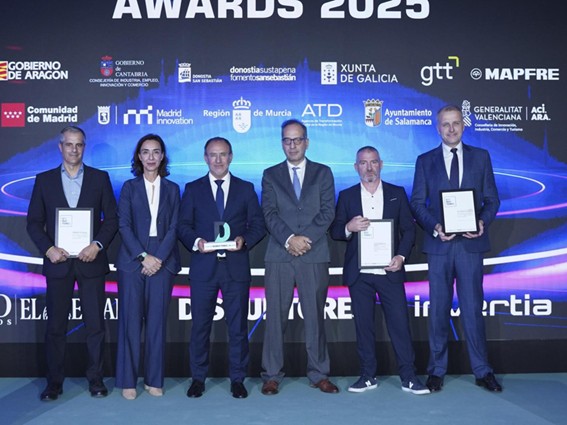
At the Affordable Housing Initiative Days in Prague, the drOp project took centre stage as a story of what can happen when a neighbourhood is given the space, tools, and trust to reinvent itself.
Speaking on behalf of Housing Europe and the project consortium, Andreea Nacu shared the journey of Santa Ana, a small neighbourhood in Ermua (Basque Country) that became a testing ground for a new way of approaching renovation, namely the Integrated Renovation Methodology (IRM).
A neighbourhood shaped by urgency — and full of potential
Santa Ana’s history is one of speed. In the 1960s and 70s, Ermua experienced an extraordinary boom, with its population growing by almost 700% in just a few years during the peak of indistrialisation. Housing had to be built fast, and Santa Ana rose quickly on the hillside, without the time or space for thoughtful urban planning.
Today, those hurried decisions are still visible:
steep slopes, narrow paths, very little greenery, low energy performance, and an ageing population who navigates these challenges daily. Local shops have slowly disappeared, and public space doesn’t always invite people to linger.
And yet, Santa Ana is also a neighbourhood full of memories, stories, and strong community ties. This combination of challenges and potential made it the perfect place to test a different approach — renovation that doesn’t start with buildings, but with people.
A methodology built with, not for, residents
The heart of the drOp project is the Integrated Renovation Methodology (IRM). Rather than arriving with a ready-made plan, the IRM moves step by step with the community through four stages:
- Engage
Reaching out, listening, building trust in a place where participation was almost non-existent. - Co-create
Working side-by-side with residents to understand what they want their neighbourhood to become. - Test
Trying things out, adjusting, learning from experience. - Evaluate
Reflecting on what worked and what still needs to evolve.
This is renovation as a shared process — not something done to people, but something built together.
Three years of walking, mapping, imagining and making
When the project began in 2022, the first task was simply to understand Santa Ana in all its dimensions. A comprehensive neighbourhood diagnosis, combining data and residents’ lived experiences, became the foundation for a common conversation.
From there, neighbours joined workshops, street walks, and visioning exercises. A shared picture of Santa Ana 2035 emerged — a neighbourhood that is greener, more accessible, more vibrant, and more connected.
Through this participatory journey, residents prioritised 10 actions, mixing the project’s original ideas with new ones proposed by the community.
Some of the most meaningful actions included:
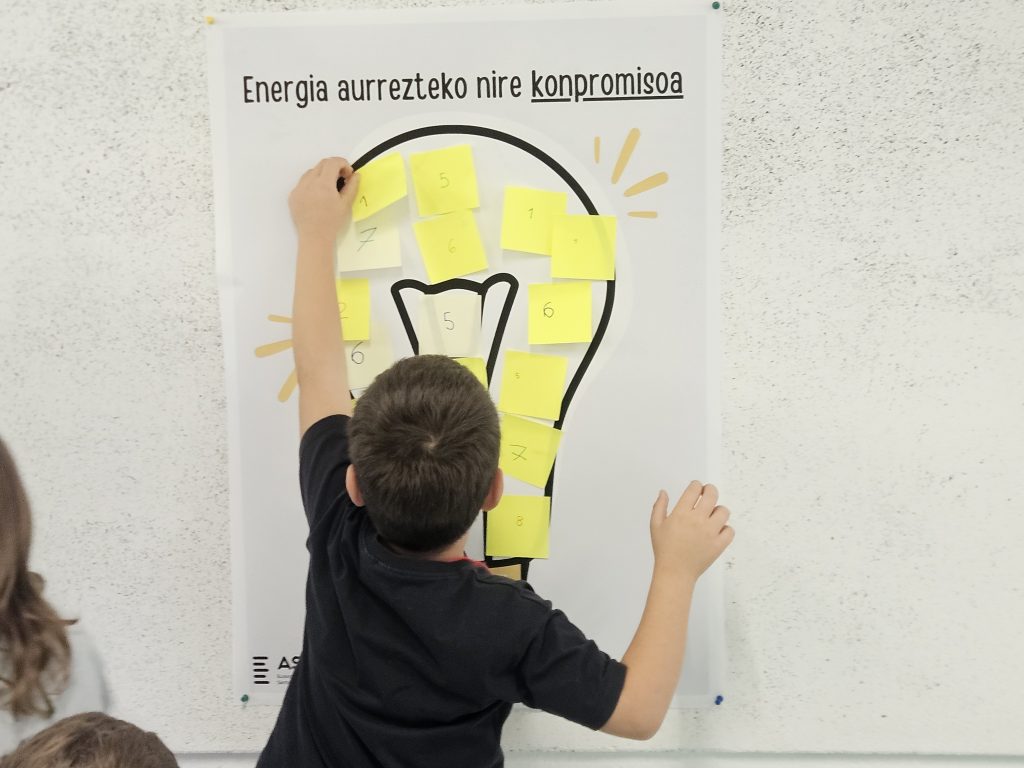
🌿 A Neighbourhood Office
A welcoming space in the heart of Santa Ana, where residents could stop by for information, get help understanding their energy bills, or simply meet one another. It quickly became a symbol of the project’s presence and openness.
📱 The Mapathon
Using a tailor-made app, residents walked the streets and mapped everything that didn’t work — and everything that could. Broken pavements, unsafe corners, forgotten spaces. This walk together sparked new ideas and revealed spots that later became transformation sites.
🎨 A party wall that tells a story
Residents didn’t want a generic mural. They wanted something that captured who they are. Local artists created proposals, neighbours voted, and together they gave new life to an otherwise anonymous wall.
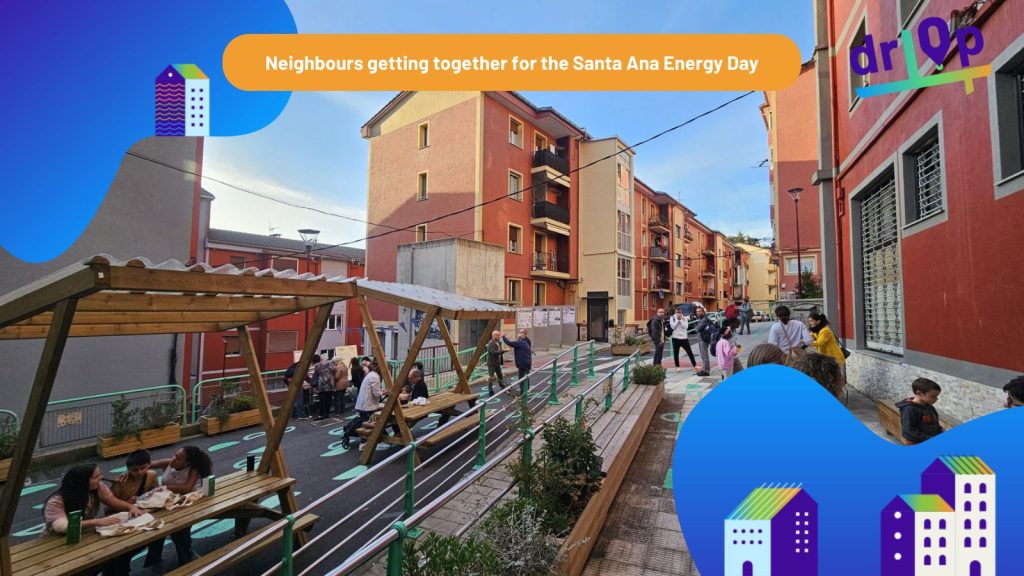
🟩 Tactical Urbanism
One of the mapped spaces was a dead-end parking area near a school and a bar — full of potential. Instead of debating endlessly, the team and residents simply tested. Picnics, games, temporary structures… observing how people used the space and whether the change felt right. A low-risk, high-learning approach.
☀️ An Energy Community
To improve energy efficiency and reduce energy bills, the project supported the creation of a local energy community involving residents, small businesses and a nearby school equipped with solar panels. drOp helped set up the legal and technical structure, with the long-term goal of having the community run independently.
What changed?
More than 130 residents have actively participated so far — a remarkable shift in a neighbourhood that had seen very little civic engagement before.
The changes are both visible and intangible:
Visible
- new public spaces activated
- an energy community legally established
- a neighbourhood office that continues to serve residents
- capacity-building through training
Intangible but deeply important
- a renewed sense of belonging
- stronger connections between neighbours
- a cultural shift from “my problem” to “our neighbourhood”
- trust — fragile, but finally growing
As Andreea stressed in Prague, this is one of the most valuable outcomes: a community that feels it has a say in its future.
Lessons we carry forward
drOp’s journey confirmed that successful neighbourhood renovation is not just technical — it is deeply human.
Some of the strongest lessons include:
- Trust is the foundation. Without it, even the best plans stay on paper.
- Power must be shared. Participation needs to be meaningful, not decorative, and people need to own their responsabilities.
- Public spaces are commons. When people feel ownership, they care for them.
- Legal frameworks matter. Bureaucracy can slow things more than participation ever will.
- Context rules. There is no universal formula — methodologies must adapt to each place and community.
One participant asked: “Without Horizon Europe funding, how do you justify such deep participation?”
The answer is simple:
Participation is not a cost. It is an investment.
Co-created plans are clearer, more realistic, and more convincing for future funding. They reduce conflict, increase acceptance, and lead to solutions that last. And, perhaps most importantly, they strengthen communities — something no renovation budge