On February 27, 2025, we gathered for a webinar under the drOp EU project, focusing on capacity building for district renovation. The session explored how equipping different stakeholders with the right skills can support urban regeneration, using insights from Santa Ana, Ermua.
The drOp project, funded by Horizon Europe, is designed to transform social housing districts into inclusive smart neighborhoods through an Integrated Renovation Methodology (IRM). Santa Ana, in the town of Ermua, was chosen as a key case study due to its unique challenges and opportunities.
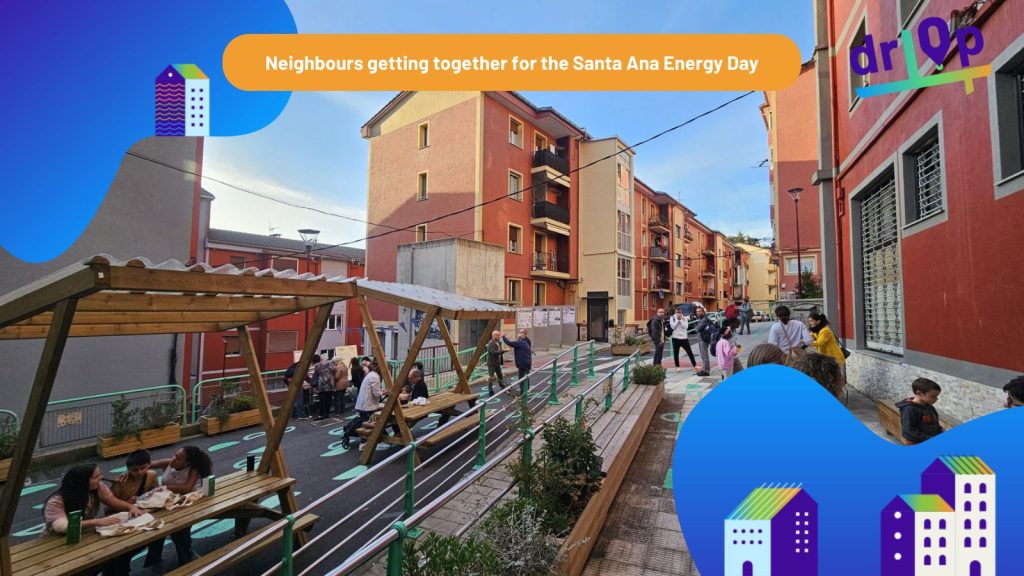
Once a traditional social housing area, Santa Ana has seen an increase in working-age residents due to nearby industrial growth. However, local businesses are struggling—the neighbourhood’s car-oriented layout, lack of public spaces, or limited accessibility have made it difficult to foster a thriving local economy. The need for capacity-building initiatives became clear: to empower residents, support local businesses, and strengthen municipal engagement in urban transformation.
Identifying Capacity Needs
Before designing a capacity-building program, it was crucial to understand the skills gaps in the community. Through research and discussions, three key groups were identified:
- Residents faced a significant digital gap due to demographic factors. Many struggled with basic digital tasks, such as making online appointments or using municipal services. They also expressed interest in energy efficiency training to help manage household costs and participate in local energy communities.
- Local businesses were in need of digital skills to improve their online presence and remain competitive. Training in digital marketing, e-commerce, and business innovation was identified as a priority.
- Municipal staff sought better tools for citizen engagement and deeper knowledge of energy-efficient district renovation.
By addressing these needs, the goal was to empower the community to take an active role in the district’s transformation.
The Capacity-Building Approach
With these insights in mind, a structured, multidisciplinary approach was developed to ensure the program’s success. The methodology combined:
- Best practices from across Europe, including successful urban regeneration projects that integrated digitalization, sustainability, and social engagement.
- An analysis of Santa Ana’s specific context, ensuring the training would be relevant and actionable.
- Close collaboration with Ermua’s municipality, refining the program based on local input and priorities.
- Clear implementation steps, identifying the resources, structures, and partnerships needed for effective training delivery.
Key Capacity-Building Initiatives
The capacity-building plan was structured into four key training modules, each tailored to a specific audience:
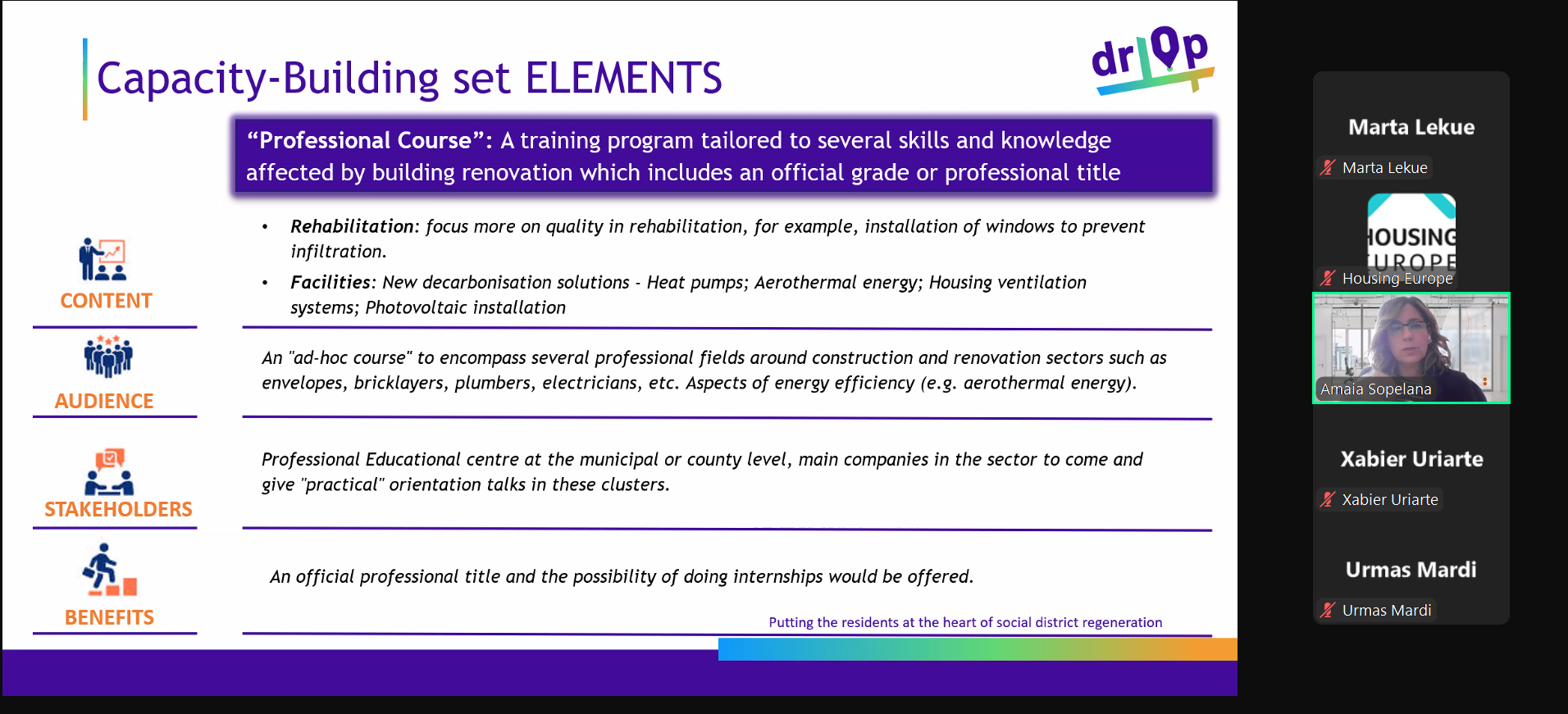
- A Professional Course for Construction & Renovation
- Focused on energy-efficient building techniques and new technologies such as heat pumps and photovoltaic installations.
- Included an official certification and the possibility of internships, ensuring real employment opportunities.
- Training for Residents
- Digital literacy courses, tailored for different levels.
- Awareness programs on energy efficiency, helping residents better understand their utility bills and make informed choices.
- Education on collective photovoltaic self-consumption and local energy communities.
- Support for Local Businesses
- Digital training, with a focus on e-commerce and digital marketing.
- Mentorship in business innovation and sustainability.
- Energy efficiency guidance, linked to recommendations from municipal services.
- Training for City Council Technicians
- Citizen engagement strategies, ensuring more effective communication with the community.
- Digitalization and multidisciplinary skills, equipping municipal staff with the tools needed for urban renovation.
- Soft skills training, improving collaboration across departments.
Lessons Learned
Through this process, several key lessons emerged:
- Understanding the capacity needs of different groups is essential for designing effective training.
- Existing resources and learning programs should be leveraged to avoid duplication and ensure efficiency.
- Flexibility is crucial—training should be adaptable to different learning levels and evolving community needs.
- Engaging the community early on helps assess their willingness and readiness to participate in training programs.
This webinar highlighted the importance of capacity building in urban regeneration. By equipping residents, businesses, and municipalities with the right skills and knowledge, we can create more inclusive, sustainable, and economically resilient neighbourhoods.
If you would like to dive deeper, we invite you to check the slides and the recording.