Archives: News

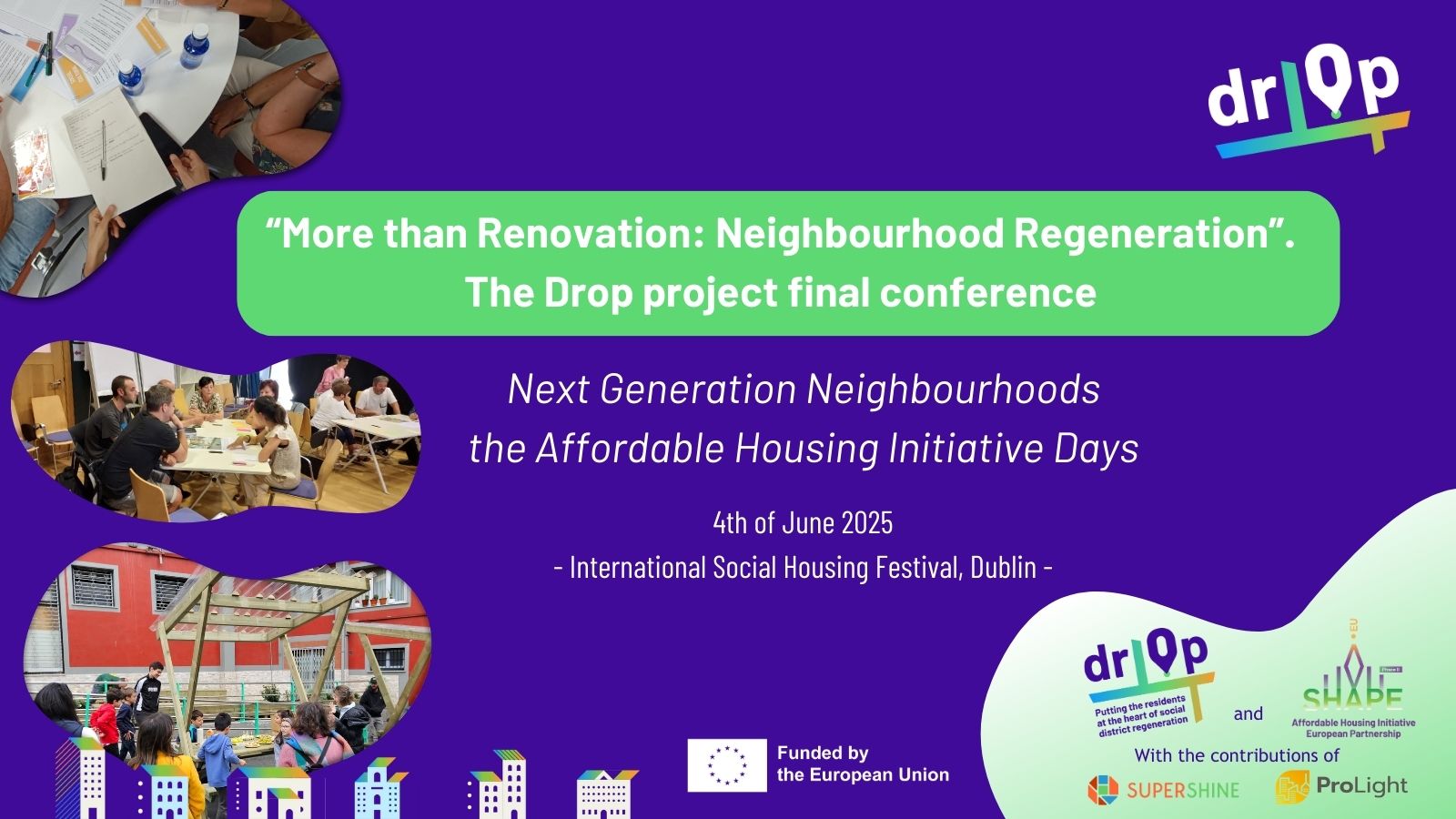
  • “More than Renovation: Neighbourhood Regeneration”. The Drop project final conference.

    “More than Renovation: Neighbourhood Regeneration”. The Drop project final conference.

    How can social housing districts become vibrant, inclusive neighbourhoods?

    In this session, we will explore how art and culture, community, and digital innovation can shape urban regeneration across Europe. You will hear from leading cities that are driving fair and sustainable transition: from Matera’s (Italy) expertise in cultural placemaking, Elva’s (Estonia) e-governance for community empowerment, and Ermua’s (Spain) pioneering regeneration work in the Santa Ana neighbourhood.

    We will present the integrated renovation approach that encapsulates all these social, environmental, and economic strategies — supported by digitalisation, creative industries, and local economic development. Other lighthouse districts pioneering innovative neighbourhood renewal will also be showcased.

    By the end of the session, you will gain practical insights into how culture, community engagement, and an attention to the economic aspect can deliver better and inclusive outcomes.

    Draft programme:


    11h45 | Welcome – Joao Goncalves, Housing Europe
    11h50 | Presentation of the DROP project methodology and overall outcomes – Silvia Urra Uriarte, Tecnalia
    12h00 | Fostering neighbourhoods through culture and local economies
    How to foster the neighbourhood from a socioeconomic and cultural perspective – Q&A

    • drOp: Inspiring through culture (Carlo Feretti, Materahub, Matera peer-city)
    • Ensuring financial sustainability (Riccardo Coletta, Agency for the Promotion of European Research & Dr. Paola Zerilli, Project Scientific Coordinator, University of York – SUPERSHINE project)
    • Urban Housing and Neomutualism (Rossana Zaccaria, President of Legacoop Abitanti)


    12h30 | Winning strategies for social cohesion in the neighbourhood – Q&A

    • drOp: Resident involvement in Ermua (Marta Lekue, Municipality of Ermua)
    • Citizen Labs (Graziella Roccella, Chief Research and Product Design Officer, Planet Smart City – ProLight project)


    12h50 | Digital social strategies to engage with residents & Financial viability – Q&A

    • drOp: From Apartment Association to Community – Efficient Tools and Opportunities (Jaanika Saar & Sirli Pippar, Municipality of Elva, Elva peer-city)
    • Applications for citizen engagement in social housing in regeneration processes (Patricia Astorgano, Codema — Dublin’s Energy Agency)

    13h10 | Closing remarks


    The drOp Final conference is part of the Affordable Housing Days within the International Social Housing Festival 2025. Please register here.

  • drOp Regional event – Basque Country

    drOp Regional event – Basque Country

    ¡Únete a nosotros el 23 de mayo! Inscríbete ahora para asistir al evento de presentación de resultados del proyecto drOp, liderado por el Ayuntamiento de Ermua dentro del programa Horizon Europe. Juntos, exploraremos las lecciones aprendidas y los desafíos en comunidades energéticas, desarrollo local, participación ciudadana y regeneración urbana. ¡No te lo pierdas!

    📅 Fecha: 23 de mayo

    🕥 Horario: 9:15h – 14:00h

    📍 Lugar: IZARRA CENTRE, Ermua

    Consistirá en 4 mesas redondas sobre:

    • ✔ Retos en el impulso de Comunidades Energéticas Locales
    • ✔ Desarrollo Económico Local como motor de cambio
    • ✔ Innovación Social para la participación ciudadana
    • ✔ Superación de barreras en rehabilitación de viviendas

    Regístrate en el siguiente formulario.

    Para añadir este evento a tu Google Calendar, haz clic aquí

    ————

    Join us on May 23rd! Register now to attend the drOp project results presentation event, led by the Ermua City Council as part of the Horizon Europe program. Together, we will explore lessons learned and challenges in energy communities, local development, citizen participation, and urban regeneration. Don’t miss it!

    📅 Date: May 23rd

    🕥 Time: 9:15 – 14:00

    📍 Location: IZARRA CENTRE, Ermua

    It will consist of four roundtables on:

    ✔ Challenges in promoting Local Energy Communities

    ✔ Local Economic Development as a driver of change

    ✔ Social Innovation for citizen participation

    ✔ Overcoming barriers in housing renovation

    Register through the following link

    To add this event to your Google Calendar, click here

  • Transforming Santa Ana neighbourhood through street art

    Transforming Santa Ana neighbourhood through street art

    Last Thursday marked the conclusion of a participatory process in which the residents of Santa Ana chose the designs that will transform three iconic spaces in the neighborhood: a new space, a redesigned median wall, and a historic photograph that will adorn the exterior of a public elevator. These projects aim to enhance the area’s aesthetics while strengthening its identity and sense of community. 

    A new space for Santa Ana 

    From five proposed designs, residents evaluated aspects such as quality, accessibility, sustainability, and aesthetics. With the support of the neighborhood office, a design was selected that promises to become an accessible, sustainable, and visually appealing gathering point for the community. 

    A mural reflecting the essence of the neighborhood 

    The new mural will improve an older one that had lost its essence. It symbolizes Santa Ana’s identity, with hands and buildings representing ideas like “building the neighborhood with our own hands.” It also includes flowers, recalling the tradition of neighbors caring for plants. 

    A Window to the Past: The Historic Photograph 

    After residents were asked to share old photos, an image from 1960 showing the newly built houses of Santa Ana was chosen. This photograph will decorate the exterior of a public elevator, connecting new generations with the neighborhood’s history. 

    A Participatory and Meaningful Process 

    These projects, chosen democratically, reflect the community’s commitment to improving their environment. Santa Ana is transforming with more liveable, inclusive spaces that are deeply connected to its identity. 

  • drOp newsletter – 4th edtion_2025

    drOp newsletter – 4th edtion_2025

    Dear reader,

    As we approach the final months of our project, the excitement is building up. In Santa Ana, drOp’s pilot case, we are now bringing to life the initiatives that residents have chosen, prioritized, and co-created. Throughout this journey, residents have actively engaged in workshops and processes to visualize their neighbourhood, co-design solutions, and make decisions. It is incredibly rewarding to finally see the tangible results of their efforts transforming Santa Ana.


    Residents are at the heart of this project. The co-creation approach has not only boosted their pride in the neighbourhood’s transformation but also strengthened their sense of belonging. It has proven key to empowering citizens to shape public spaces, fostering a culture of collective governance and enhancing participatory skills among locals. The aim is to equip residents with the knowledge and tools to continue organizing public participation activities and effectively communicate their needs to authorities beyond the project’s duration.


    Equally exciting is the wealth of insights we are gaining from drOp’s partner cities—Elva,Matera, and Ermua. Each city offers unique contexts and experiences, allowing us to identify both differences and common patterns that can benefit social districts across Europe. We are currently preparing a replication roadmap, which will compile all our work, lessons learned, and practical tips for anyone involved in urban renovation projects.


    This final stage of the project is crucial as we consolidate our findings and prepare to share them with a broader audience. The replication roadmap will serve as a comprehensive guide, capturing the essence of our experiences and providing valuable insights for future initiatives.


    Stay tuned to our newsletter, website, and social media channels for all the latest updates and exciting news. We look forward to sharing more about our journey and the positive impact we are making together.

    Marta Lekue
    Coordinator of drOp project.

  • Celebrating Community Co-Creation: Santa Ana’s Second Temporary Design Inaugurated

    Celebrating Community Co-Creation: Santa Ana’s Second Temporary Design Inaugurated

    We are thrilled to announce the inauguration of the second temporary design in the Tactical Urbanism initiative in the Santa Ana neighbourhood. This milestone marks a significant step in our journey to transform public spaces through community engagement and co-creation.

    Rooted in the residents’ goal to improve Santa Ana’s public spaces, this initiative is a testament to their shared vision for the neighbourhood’s future. By leveraging the structured approach of the Integrated Renovation Methodology (IRM), we aim to transform a parking space into a vibrant community area, fostering engagement and enhancing urban life.

    Phase 1: Mapping and Initial Transformation

    The journey began with a Mapathon event, where residents used a tailor-made digital app to geolocalise and select spaces for transformation. This was followed by an open co-design workshop to build a community vision for the space. The selected parking lot was then transformed into a pedestrian area with quick, temporary solutions to test its new use.

    Phase 2: Refining the Design

    In the second phase, we gathered feedback from residents through surveys to refine the initial transformation. An architectural studio developed a second temporary design based on these insights, ensuring it incorporated community preferences and addressed any issues. The inauguration of this design was a lively event, featuring local school children planting greenery and learning about the benefits of green public spaces and collective governance of public space.

    Looking Ahead: Testing and Evaluation

    Over the coming months, residents will pilot this new space, providing feedback through various methods, including public voting, surveys, observations, and sensor data. This evaluation will inform the final design proposal, ensuring it meets the community’s needs and preferences.

    This initiative is more than just a design project; it’s a movement towards a more connected, sustainable community. By equipping residents with the knowledge and tools to self-organize and communicate their needs, we aim to inspire long-term, collective action for the transformation of Santa Ana.

    Join us in celebrating this milestone and looking forward to the continued transformation of our pilot neighbourhood!

  • Community momentum and new drOp project actions

    Community momentum and new drOp project actions

    Neighbourhood participation: a positive balance

    The drOp project has been a key initiative to strengthen neighbourhood participation and foster collaboration within the community. In this context, a total of 92 participating neighbours have been identified, with an equal distribution of 50% between men and women. Among them, 13% have participated in more than three activities, while about 10% have taken part in more than five.

    Considering that the neighbourhood has 637 residents, the 92 participants represent approximately 14.4% of the total community. This percentage indicates that we are approaching the target of 20% of neighbours involved in the project, which reflects significant progress in promoting active participation and community engagement.

    Among the activities organised, a total of 20 participatory actions were carried out with neighbours, designed to foster collaboration and strengthen the community. These initiatives covered a range of areas, from social activities to neighbourhood improvement projects, reflecting residents’ commitment to community development. One of these highlights was the inauguration of the Neighbourhood Office, consolidating itself as a key space for communication and support to the community, registering a total of 47 consultations. Of these, 38% were related to information on the drOp project, 30% focused on reporting incidents in the neighbourhood, 21% to receive information on rehabilitation grants and 11% to receive advice on electricity bills. In addition to resolving queries, the Neighbourhood Office has served as a space to foster community connections, organising activities that promote collaboration and dialogue between neighbours.

    Future actions: towards and energetic community and a renewed neighbour

    The project continues to move forward with new initiatives that seek to further involve neighbours. One of the priorities is the creation of an energy community, which will involve residents as well as the local school and local businesses. This project not only aims to improve energy efficiency, but also to empower residents to manage sustainable resources.

    Another major initiative is the renovation of a neighbourhood square, currently difficult to access and unattractive to residents. To ensure that the redevelopment reflects the needs and wishes of the community, neighbours have been asked to vote on design options proposed by different architectural firms. This participatory approach will also be applied to the renovation of a mural, where residents will be able to choose between several designs that best represent the identity of the neighbourhood.

    In March, a course on energy efficient construction will be launched. This programme not only offers specialised training but also includes a contract to apply the skills learned in a public building of Ermua Town Council. This initiative aims to train residents in key areas of sustainability, while offering them job opportunities.

    The neighbourhood has become an example of how citizen participation can drive significant change. With active neighbours and a Neighbourhood Office that resolves queries and fosters community connection, the project is moving towards the creation of an energetic community and the renovation of public spaces. The inclusion of neighbours in decision-making, through voting and specialised training, reinforces a sense of ownership and ensures that initiatives respond to the real needs of the community.

  • Empowering Local Action: building the skills for urban regeneration

    Empowering Local Action: building the skills for urban regeneration

    On February 27, 2025, we gathered for a webinar under the drOp EU project, focusing on capacity building for district renovation. The session explored how equipping different stakeholders with the right skills can support urban regeneration, using insights from Santa Ana, Ermua.

    The drOp project, funded by Horizon Europe, is designed to transform social housing districts into inclusive smart neighborhoods through an Integrated Renovation Methodology (IRM). Santa Ana, in the town of Ermua, was chosen as a key case study due to its unique challenges and opportunities.

    Once a traditional social housing area, Santa Ana has seen an increase in working-age residents due to nearby industrial growth. However, local businesses are struggling—the neighbourhood’s car-oriented layout, lack of public spaces, or limited accessibility have made it difficult to foster a thriving local economy. The need for capacity-building initiatives became clear: to empower residents, support local businesses, and strengthen municipal engagement in urban transformation.

    Identifying Capacity Needs

    Before designing a capacity-building program, it was crucial to understand the skills gaps in the community. Through research and discussions, three key groups were identified:

    • Residents faced a significant digital gap due to demographic factors. Many struggled with basic digital tasks, such as making online appointments or using municipal services. They also expressed interest in energy efficiency training to help manage household costs and participate in local energy communities.
    • Local businesses were in need of digital skills to improve their online presence and remain competitive. Training in digital marketing, e-commerce, and business innovation was identified as a priority.
    • Municipal staff sought better tools for citizen engagement and deeper knowledge of energy-efficient district renovation.

    By addressing these needs, the goal was to empower the community to take an active role in the district’s transformation.

    The Capacity-Building Approach

    With these insights in mind, a structured, multidisciplinary approach was developed to ensure the program’s success. The methodology combined:

    • Best practices from across Europe, including successful urban regeneration projects that integrated digitalization, sustainability, and social engagement.
    • An analysis of Santa Ana’s specific context, ensuring the training would be relevant and actionable.
    • Close collaboration with Ermua’s municipality, refining the program based on local input and priorities.
    • Clear implementation steps, identifying the resources, structures, and partnerships needed for effective training delivery.

    Key Capacity-Building Initiatives

    The capacity-building plan was structured into four key training modules, each tailored to a specific audience:

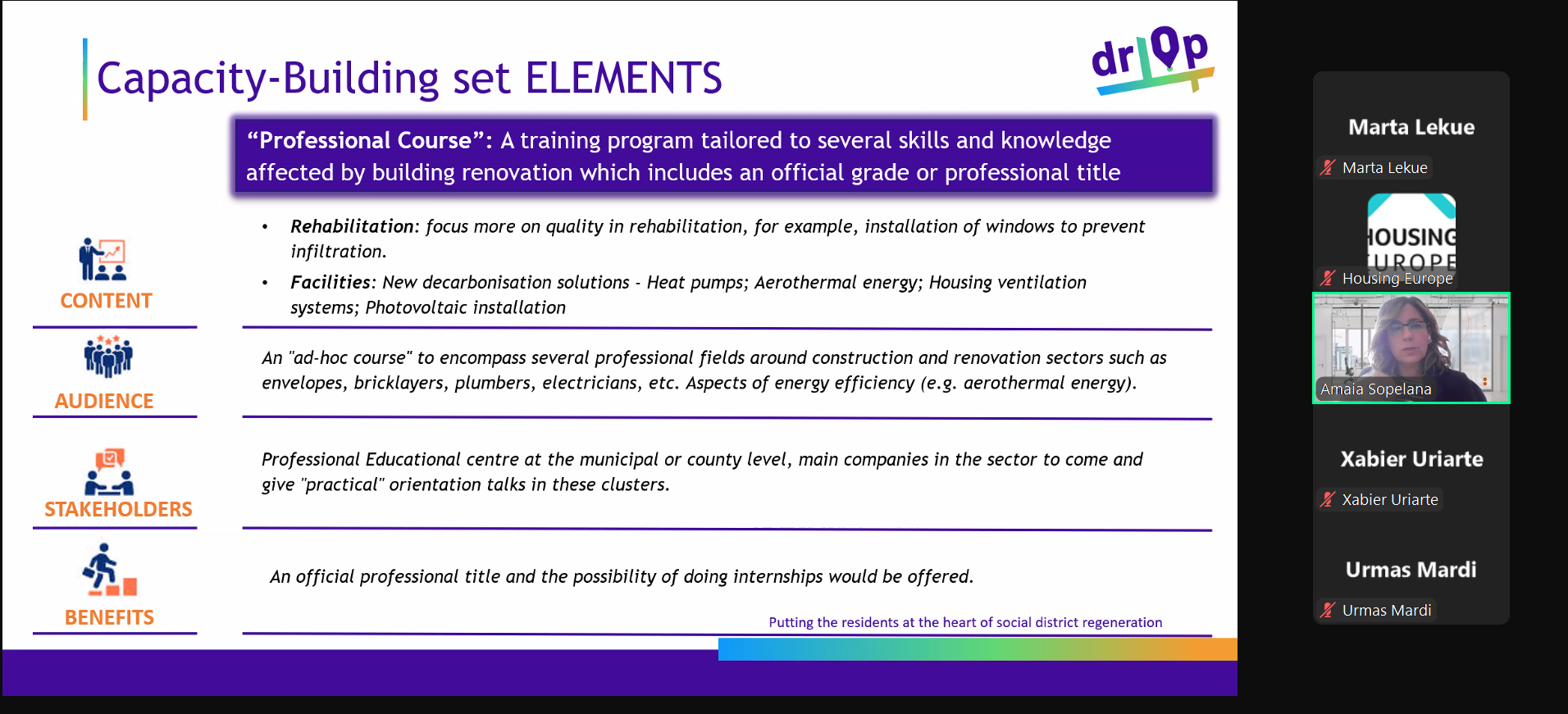
    1. A Professional Course for Construction & Renovation
      • Focused on energy-efficient building techniques and new technologies such as heat pumps and photovoltaic installations.
      • Included an official certification and the possibility of internships, ensuring real employment opportunities.
    2. Training for Residents
      • Digital literacy courses, tailored for different levels.
      • Awareness programs on energy efficiency, helping residents better understand their utility bills and make informed choices.
      • Education on collective photovoltaic self-consumption and local energy communities.
    3. Support for Local Businesses
      • Digital training, with a focus on e-commerce and digital marketing.
      • Mentorship in business innovation and sustainability.
      • Energy efficiency guidance, linked to recommendations from municipal services.
    4. Training for City Council Technicians
      • Citizen engagement strategies, ensuring more effective communication with the community.
      • Digitalization and multidisciplinary skills, equipping municipal staff with the tools needed for urban renovation.
      • Soft skills training, improving collaboration across departments.

    Lessons Learned

    Through this process, several key lessons emerged:

    • Understanding the capacity needs of different groups is essential for designing effective training.
    • Existing resources and learning programs should be leveraged to avoid duplication and ensure efficiency.
    • Flexibility is crucial—training should be adaptable to different learning levels and evolving community needs.
    • Engaging the community early on helps assess their willingness and readiness to participate in training programs.

    This webinar highlighted the importance of capacity building in urban regeneration. By equipping residents, businesses, and municipalities with the right skills and knowledge, we can create more inclusive, sustainable, and economically resilient neighbourhoods.

    If you would like to dive deeper, we invite you to check the slides and the recording.

  • [Webinar] Empowering Local Action: Training for Urban Regeneration

    [Webinar] Empowering Local Action: Training for Urban Regeneration

    Join us for an interactive peer-learning webinar exploring how digital innovation can drive district renovations that are sustainable, inclusive, and economically beneficial.

    This session will introduce the drOp project’s capacity-building framework, designed to empower local communities and stakeholders with the tools and knowledge to lead ambitious renovation efforts. Built on best practices from similar initiatives, it offers practical training modules tailored to real-world challenges.

    Discover how a multidisciplinary approach can accelerate the transformation of districts into smart, connected, and vibrant neighbourhoods. Whether you’re a policymaker, urban planner, or community leader, this webinar will equip you with insights and strategies to support the Renovation Wave, New European Bauhaus, and Affordable Housing Initiative.

    📅27th of February

    ⌚11:30-12:15 CET

    📍Online

    Agenda

    • 11:30-11:40 | Introduction – Marta Lekue, Project Officer, Municipality of Ermua
    • 11:40-12:00 | Capacity-building – Amaia Sopelama, Senior Researcher, City, territory and enviroment, Urban Transformation Laboratory
    • 12:00-12:15 | Q&A

    Register here.

  • drOp is celebrating with the residents

    drOp is celebrating with the residents

    The residents of Santa Ana have said goodbye to 2024 with a Christmas gathering in their Neighbourhood Office, enjoying a hot chocolate and an entertaining bingo game. This meeting, framed in the European drOp project, has served as a thank-you for the participation and involvement of the neighbours in the co-creation process, thus celebrating this year’s progress and encouraging them to continue participating in future initiatives of the project. The event has also been an occasion to promote interaction, debate and social cohesion among the residents of Santa Ana.

    Outstanding actions of 2024

    The end of 2024 has been marked by important initiatives of the drOp project:

    Mapathon activity:
    This participatory dynamic with the citizens of Santa Ana served to map the specific places in the neighbourhood with potential for improvement. The different teams toured the area identifying key points and sharing their perceptions and ideas, which allowed for an in-depth analysis of local needs.  This mapping was carried out through a geolocation mobile application designed by the drOp project for the occasion.

    • Energetic Communities workshop:
      With the help of experts on the subject, this informative session allowed the neighbours of Santa Ana to learn what are local energy communities as well as their different existing models. A study of Santa Ana’s solar potential has been carried out and work on energy sustainability, an essential pillar of the drOp project, will continue in 2025.
    • Transformation of an urban space:
      After being identified by residents as a place of interest during the Mapathon activity, a cul-de-sac (a street with no exit) intended for parking was temporarily transformed into a public square. Through tactical urbanism, a methodology that involves experimenting with simple changes in the public space to observe and learn from its use, elements of street furniture and decoration were installed. The opinions gathered from the neighbours will guide a final design in 2025, which will be carried out by an architecture studio.
    • Inauguration of the Neighbourhood Office:
      This space located in the centre of Santa Ana was opened as a point of attention and meeting for people living in the neighbourhood. The office provides technical and legal advice on existing public grants for the renovation of homes, advice on energy bills and information on the different participatory initiatives carried out in the drOp project.
    • Comprehensive Care Program:
      With the aim of improving the quality of life of the elderly, two free digital services have been offered to the residents of the neighbourhood. The first service consists of a functional mobility assessment that seeks to prevent fall risks. The second service offers an innovative system of automatic pill dispensers, designed to facilitate medication management, while providing greater security to both users and their families.

    Hope and inspiration for the year to come

    The drOp project will continue in 2025 with new actions and proposals to improve the quality of life in the Santa Ana neighbourhood. Among the planned initiatives are the painting of a mural that integrates concepts expressed by the residents, the installation of photovoltaic panels for the creation of an energy community, the development of a digital app for residents to report incidents in the neighbourhood directly to the municipality and new interventions in public spaces designed by different architecture studios. In addition, a capacity building set will be launched to promote the local economy.

    From the Neighbourhood Office, we thank all people for their valuable collaboration this year and we hope to continue building a more inclusive and innovative environment together.

    To make sure you stay up-to-date with the drOp project news, follow us on LinkedIn and subscribe to our newsletter!

    What is drOp?

    The drOp project, funded by the European Union, seeks to develop an integrated renovation methodology (IRM) that transforms social housing neighbourhoods into more advanced and inclusive communities, from a digital, social, energy and urban perspective. The project promotes social innovation and fosters the local economy through a people-centred approach, digital technologies, energy efficiency and the potential of cultural and creative industries.

  • Rewatch the Webinar: The Santa Ana Neighbourhood and its co-governance journey

    Rewatch the Webinar: The Santa Ana Neighbourhood and its co-governance journey

    Can renovation projects go beyond upgrading buildings? The Santa Ana neighbourhood—the main pilot of the drOp project—demonstrates that they can. Through a co-governance approach, renovation became a community-driven success story.

    Residents engaged in a structured process, moving from a shared vision to practical actions such as tactical urbanism initiatives and the creation of a Local Task Force. Along the way, the project highlighted the importance of clear communication, inclusivity, and expectation management in achieving lasting results.

    Key takeaways for other European cities:

    • Prioritize citizen engagement from the very beginning.
    • Apply a structured yet adaptable methodology.
    • Foster transparent, two-way communication.
    • Embrace diversity and inclusivity to ensure all voices are heard.

    Santa Ana’s journey shows that renovation is not just about infrastructure—it can empower communities, strengthen local governance, and build more vibrant, inclusive neighbourhoods.

    📺 Watch the full webinar recording below.